
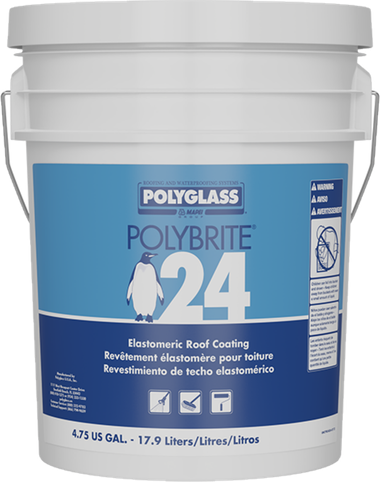
PolyBrite 24
A cost-conscious maintenance coating system for qualifying flat roofs.
- Application
- Two coating applications at approximately 24 wet mils per coat.
- SolTerra workmanship warranty
- 2 years
- Manufacturer warranty
- Up to 10 years*
A roof coating can extend the life of a flat roof for years — but only if the roof underneath it is properly inspected, cleaned, repaired and reinforced first.
At SolTerra Roofing, we install professional Polyglass acrylic elastomeric roof coating systems on residential flat roofs throughout Tucson and Southern Arizona.
Before we recommend coating anything, we determine whether your roof is actually a good candidate. If it isn't, we'll tell you.
Not every flat roof should be coated.
That's one of the first things we determine during your roof inspection.
Roof coating is generally a maintenance system used to protect and extend the service life of an existing roof that is still worth preserving. Applying coating to the wrong roof — or coating a roof before it needs it — can do more harm than good.
We once inspected a relatively new modified-bitumen roof after the homeowner had been told that it needed to be coated every five years.
It didn't.
The existing roofing membrane was still performing exactly as it was designed to. Coating it unnecessarily could have reduced the useful life of the existing system rather than extending it.
We recommended that the homeowner leave it alone.
Acrylic elastomeric roof coating creates a seamless protective surface over an appropriate existing roof system.
For Tucson flat roofs, coating is commonly used as scheduled maintenance to protect the roofing system from continued weathering, UV exposure and deterioration while helping extend the useful life of the roof underneath it.
A coating isn't a replacement for repairing a damaged roof.
The repair work underneath the coating is often more important than the coating itself.

Your roof doesn't need to be leaking before it needs attention. Some of the earliest warning signs appear long before water reaches the interior of the home. During an inspection, we commonly look for:
Catching these conditions while the underlying roofing system is still serviceable can make the difference between relatively simple roof maintenance and a much larger repair or replacement later.
The coating isn't usually where the job succeeds or fails. The details underneath it are.
From the ground, two freshly coated roofs can look almost identical. Both are white. Both look clean. Both might look perfectly waterproof.
The real difference may not become visible for another two or three years. That's because a long-lasting coating job begins before the coating is ever applied.
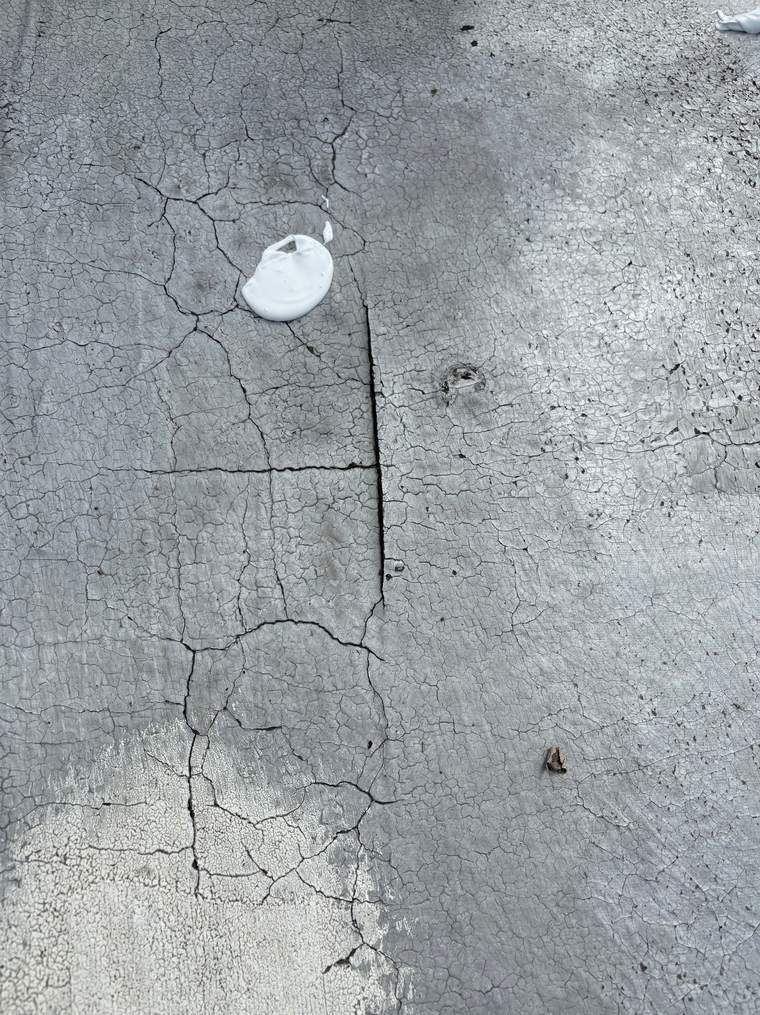
Flat roofing systems move. As the roof heats up during the day and cools down at night, existing cracks and transitions continue to experience movement.
Simply brushing or rolling coating over an expansion crack may temporarily hide it, but the underlying crack can eventually open again.
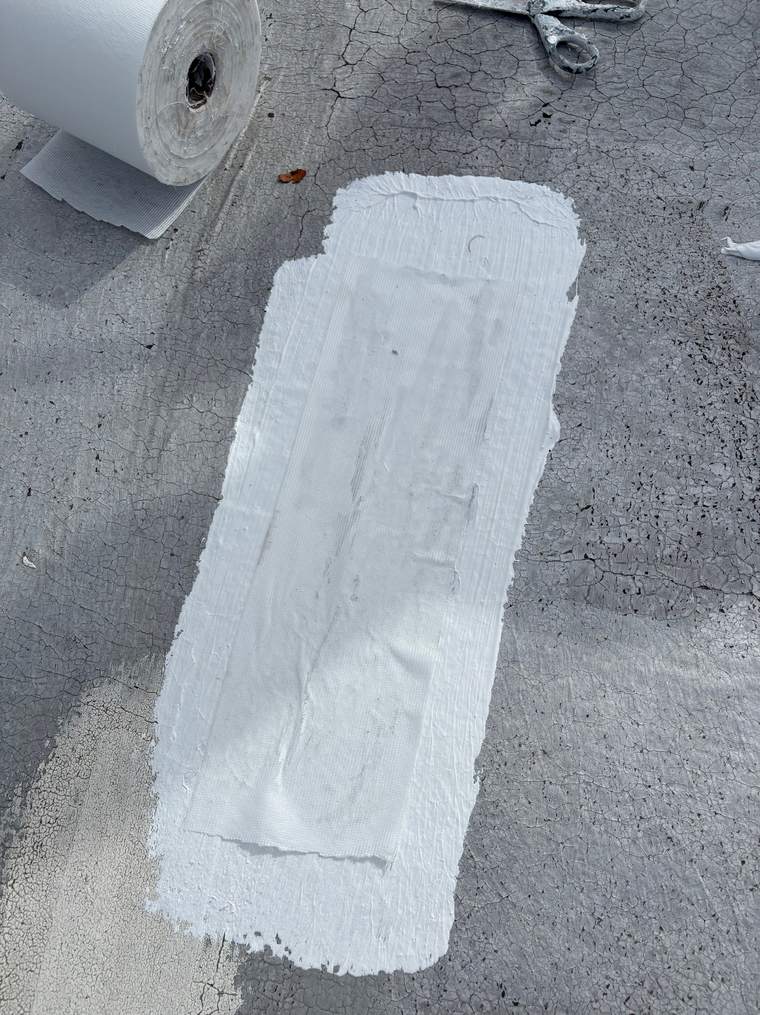
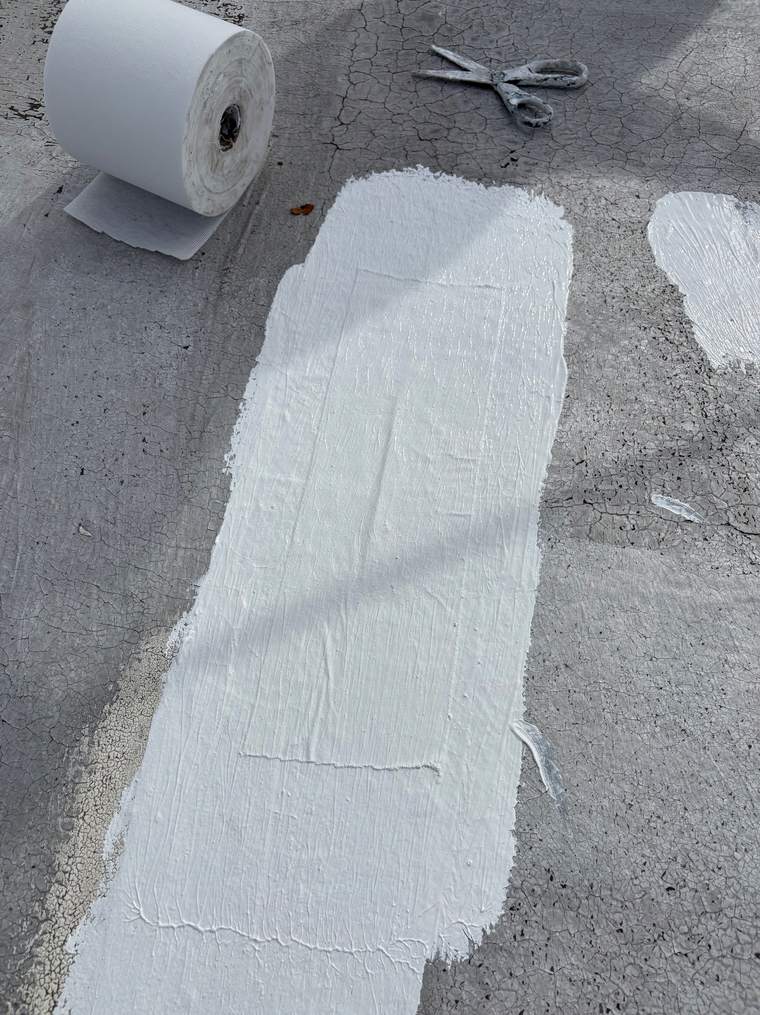
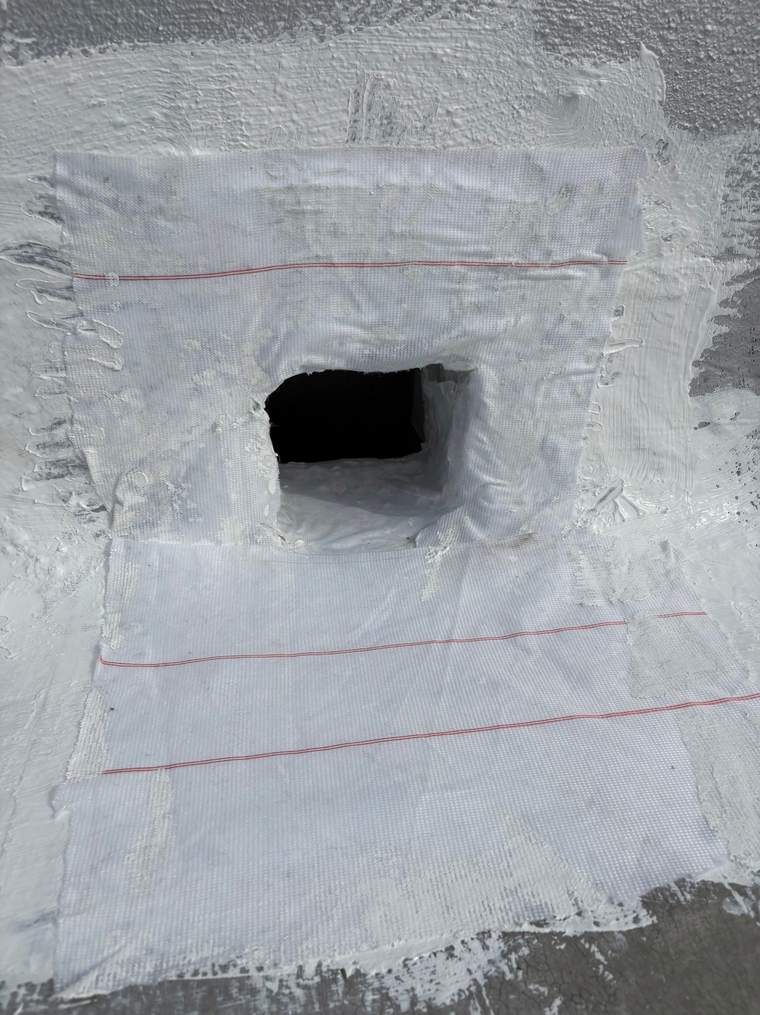
Where reinforcement is needed, we embed polyester reinforcing fabric into our repair system before applying the field coating. The fabric helps bridge and reinforce the vulnerable area rather than simply covering it.
And there's another reason this step matters: once the entire roof has been coated, it can become extremely difficult to identify where those original cracks were. If they're not properly repaired before the field coating goes down, the homeowner may never know which areas were skipped until those cracks begin opening again.


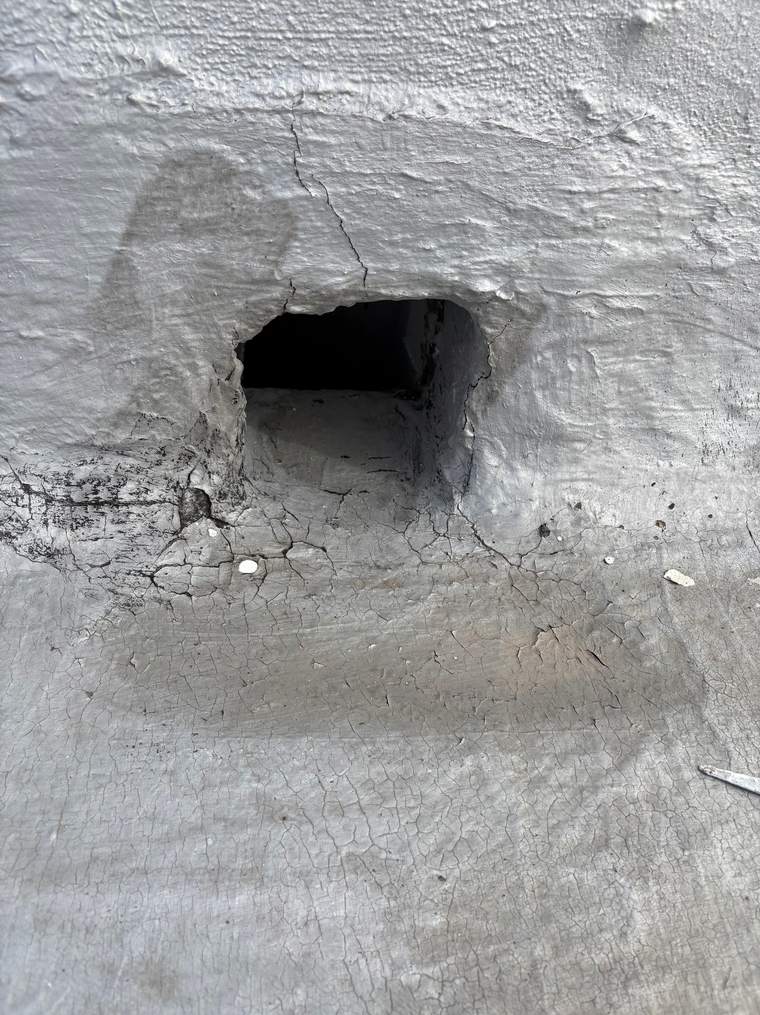
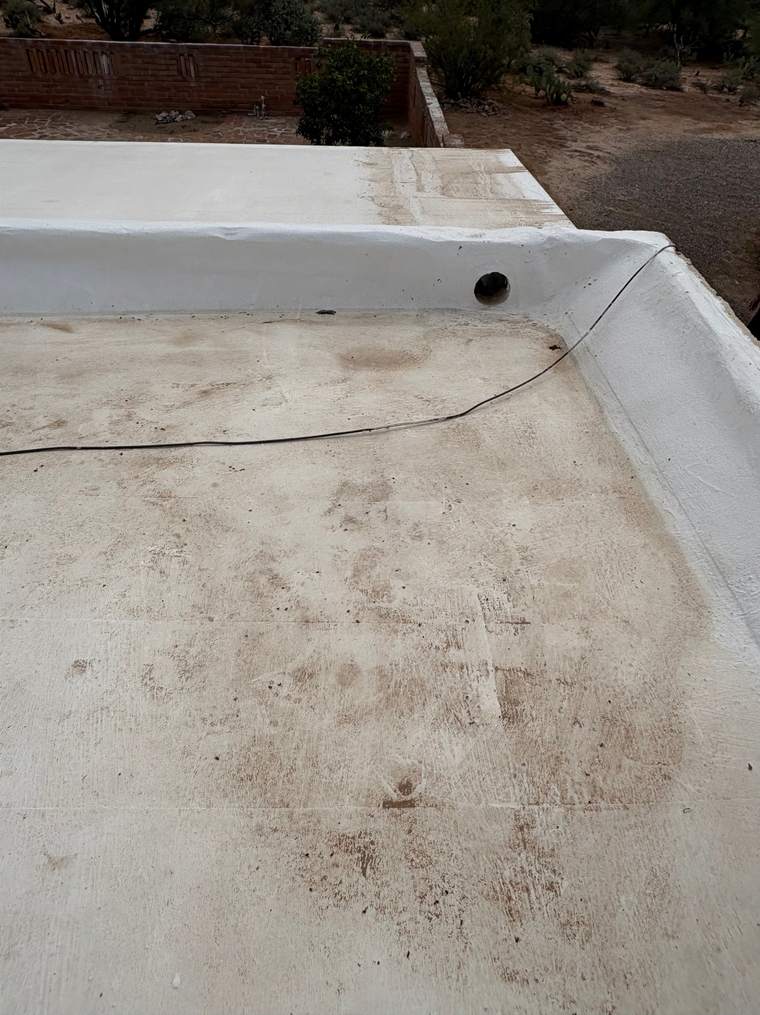
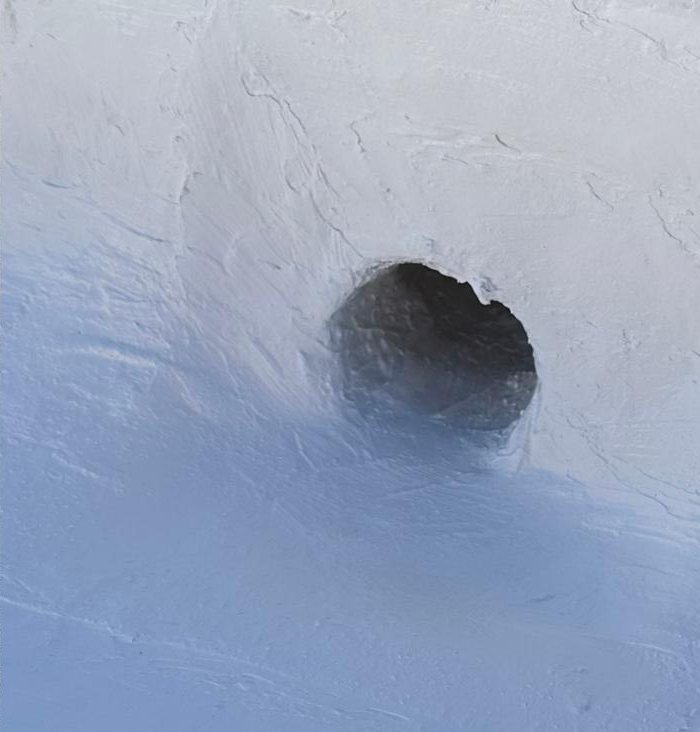
Scuppers are designed to move water off the roof. They're also one of the places where improper detailing can create leaks.
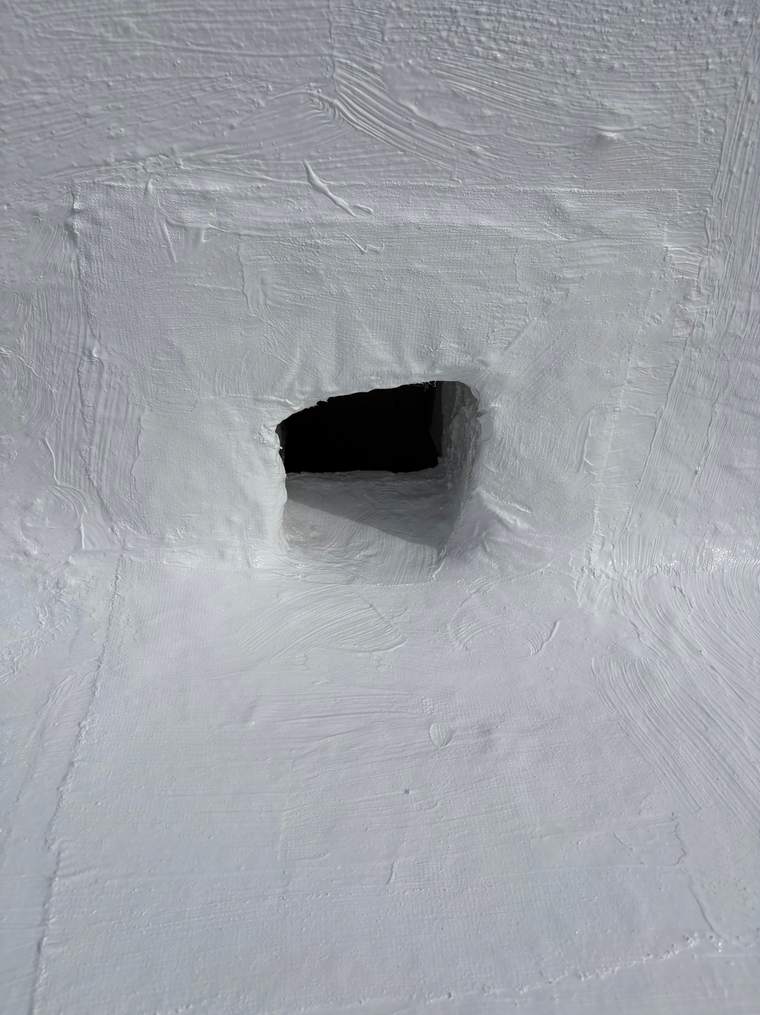
Every scupper should be inspected and properly sealed into the surrounding roofing system before the roof is coated. This isn't the place to simply brush some coating around the edges and move on.
We inspect the scupper, surrounding roofing membrane and transitions and repair or reinforce the area where needed before the finish coating is installed.


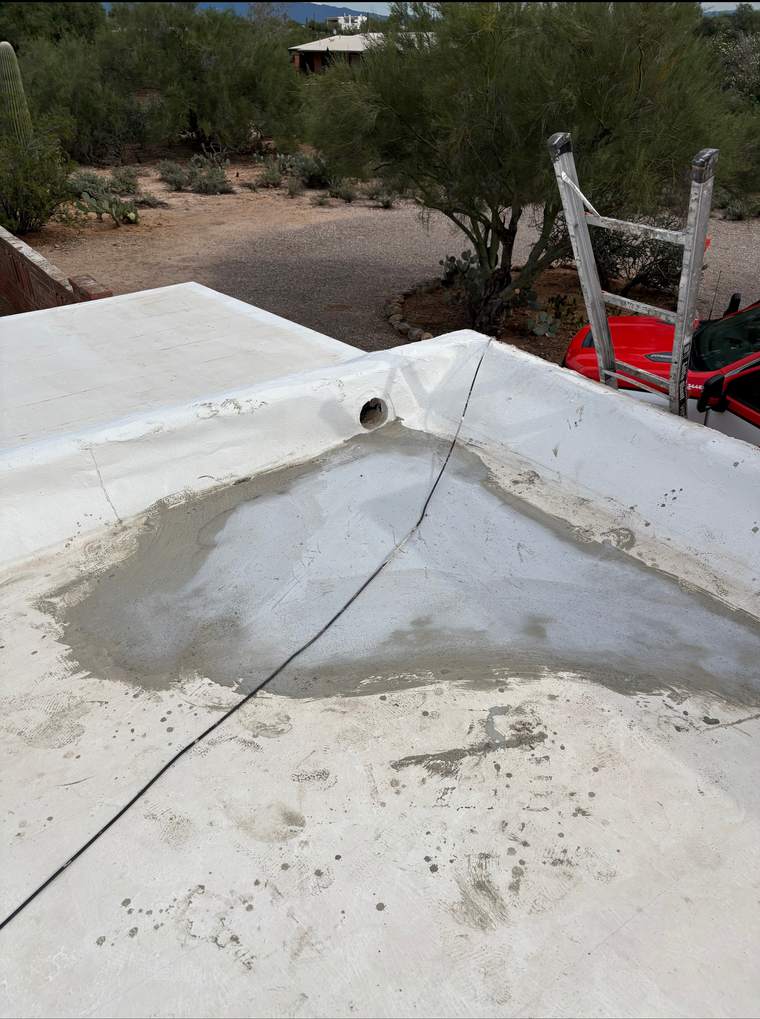
A new coating doesn't change the shape of your roof. If water is sitting in the same low spot after every monsoon storm, coating over it doesn't correct the reason the water is there.
Some drainage problems can be improved before the roof is recoated. Depending on the existing roof, we may recommend slope-building or drainage corrections to help redirect water toward the roof's scuppers or drains. This can include correcting isolated low areas where practical before installing the coating system.
Drainage correction is priced separately because every roof is different. During your inspection, we'll show you where water is collecting and explain whether the condition should be addressed before coating.


Real SolTerra jobs — drag the handle to compare the detail work before and after.
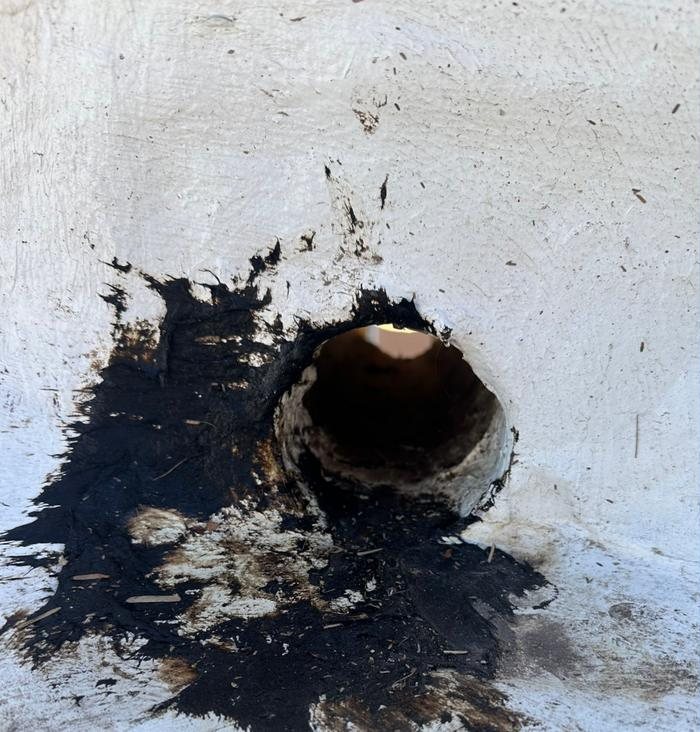
Aged mastic around a pipe, before and after.
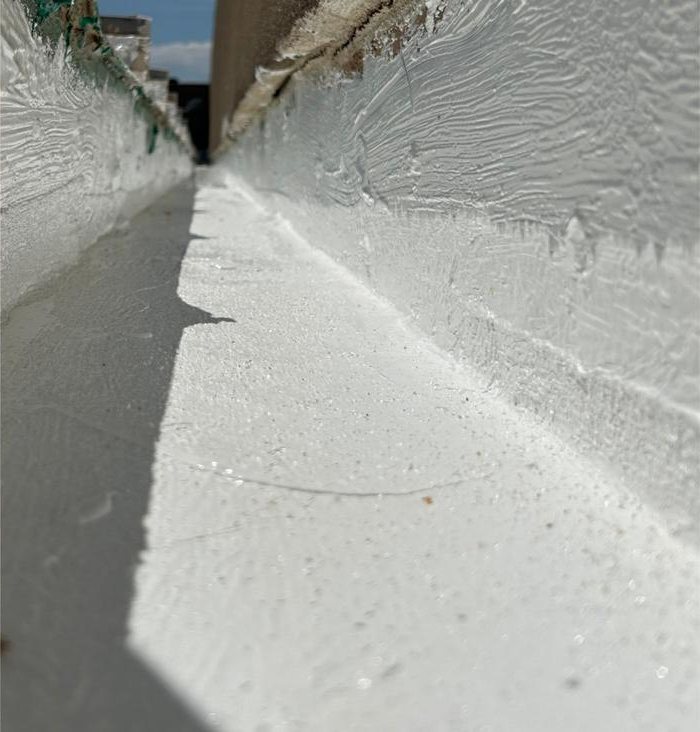
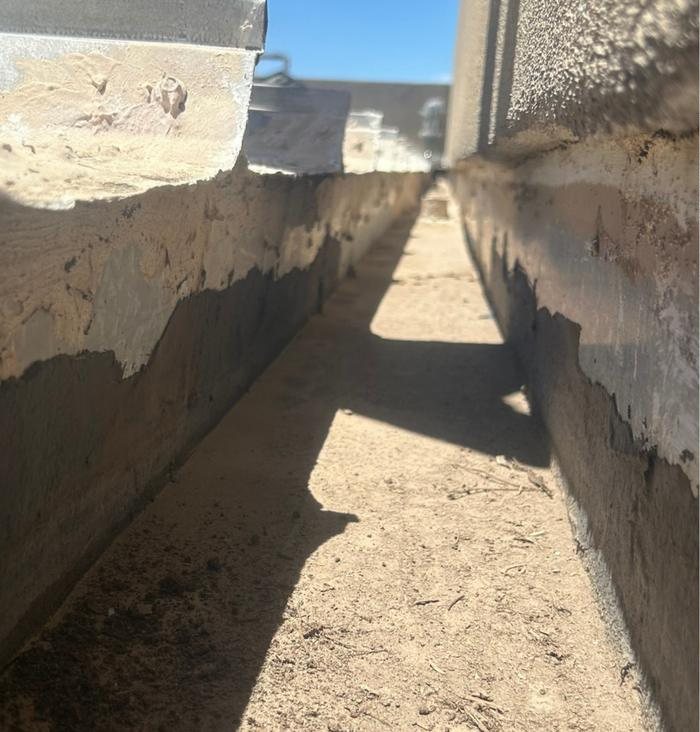
Worn parapet and channel surfaces, before and after.

We inspect the overall condition of the roofing system along with seams, flashings, penetrations, scuppers, parapet transitions, HVAC areas, blisters and drainage.
We also determine whether coating is actually the right solution.
Every roof we coat is pressure washed. Dust, dirt, loose coating and other contaminants can interfere with adhesion. Proper surface preparation gives the new coating a clean surface to bond to.
Roof coatings and repair materials need an appropriately prepared and dry surface. We allow the roof to dry before moving into repairs and coating application.
If the inspection identifies an appropriate area for slope correction or drainage improvement, that work is completed before the coating system is installed.
We repair bubbles and blisters, lifting seams and other deficiencies identified during the inspection.
Polyester reinforcement is installed where necessary at cracks and vulnerable transitions rather than simply covering those areas with coating.
Penetrations and transitions are reinforced or three-coursed where conditions require it. Scuppers receive specific attention because they are critical drainage and flashing points.
We also address the roofing around and beneath HVAC supports wherever practical so equipment supports do not create unprotected areas or unnecessary water dams. If an HVAC support block can be safely detailed underneath, the area is prepared and coated before the support is returned to position.
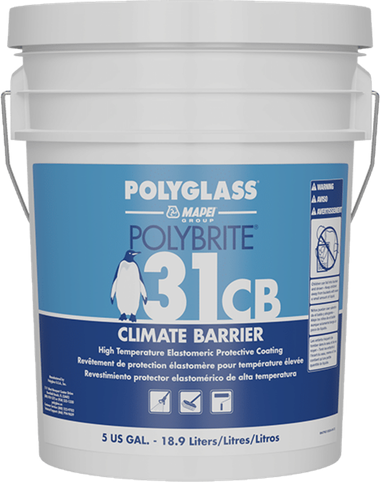
Our standard acrylic coating systems are installed at the specified application thickness. For our PolyBrite 24 and PolyBrite 31 systems, this generally consists of two coating applications at approximately 24 wet mils per coat.
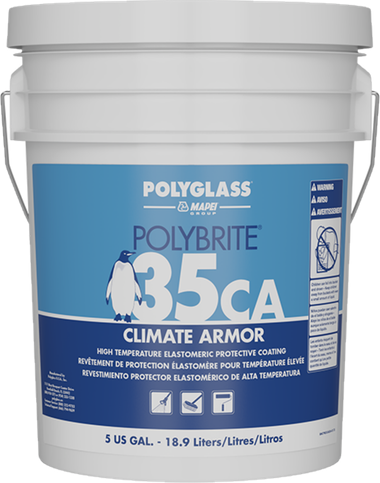
Our premium PolyBrite 35 system includes a PolyBrite 71 base coat followed by the PolyBrite 35 finish coat, with each coating applied at the specified rate.
Depending on the roof size and conditions, coatings may be spray-applied, rolled or a combination of both.
After application, we inspect the completed system and details before finishing the project.
We offer three residential acrylic elastomeric coating options. The right option depends on your roof condition, expected service life and budget.
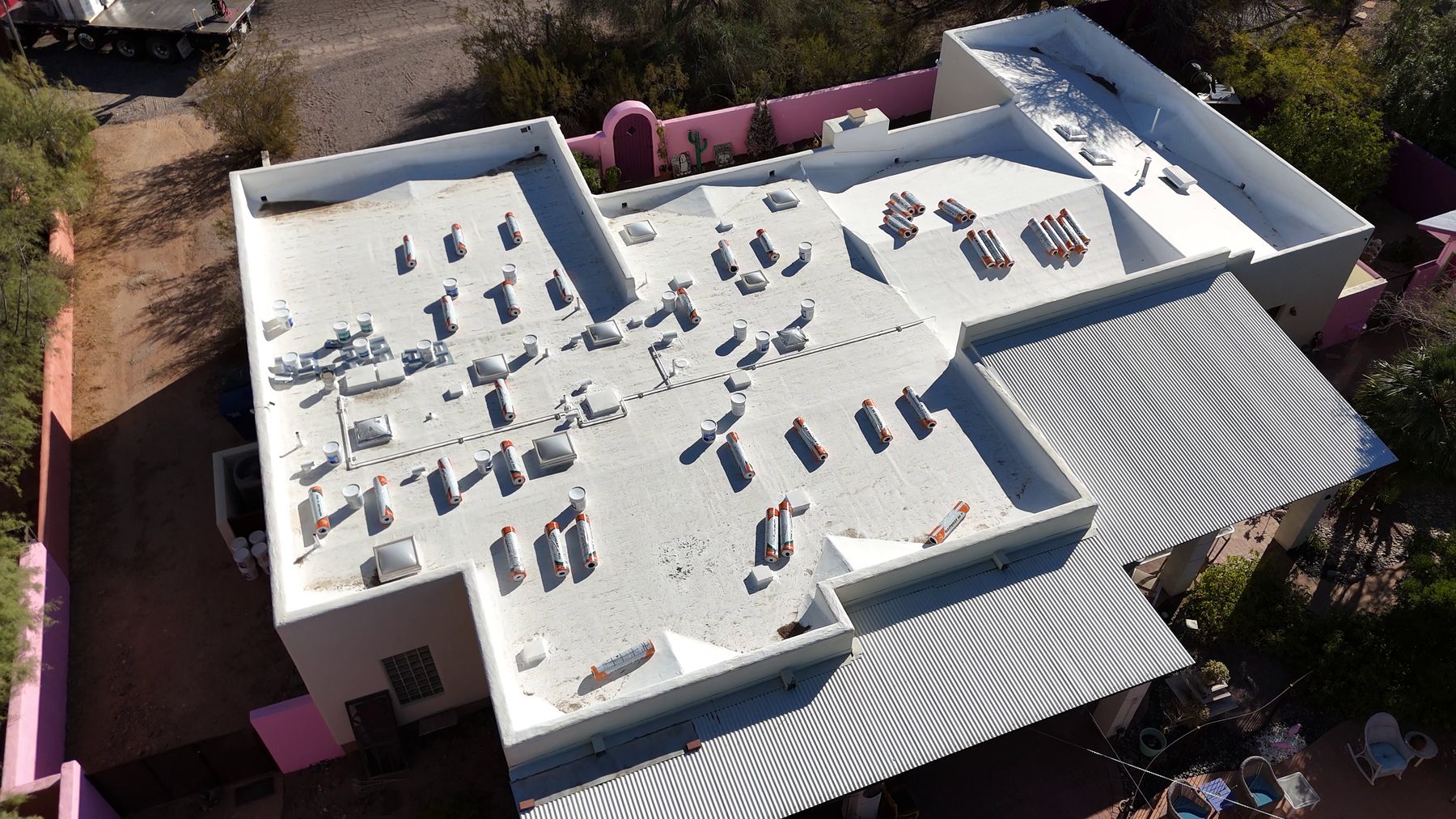
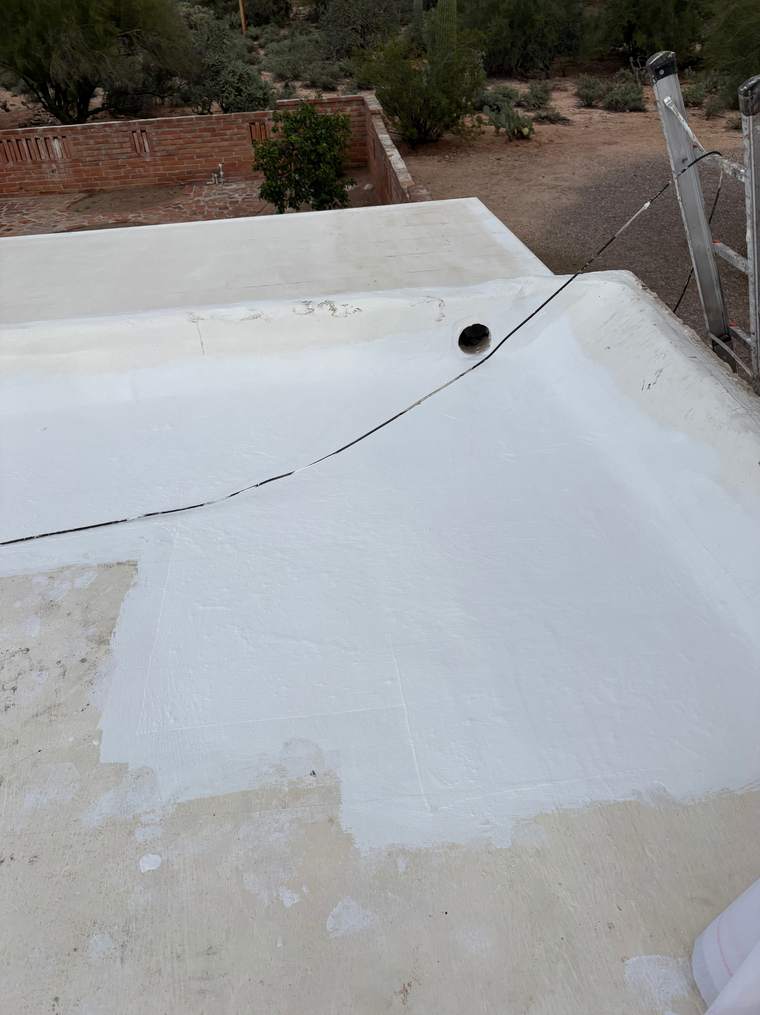
Don't just look at the finished white roof. Look at what happened before it became white.
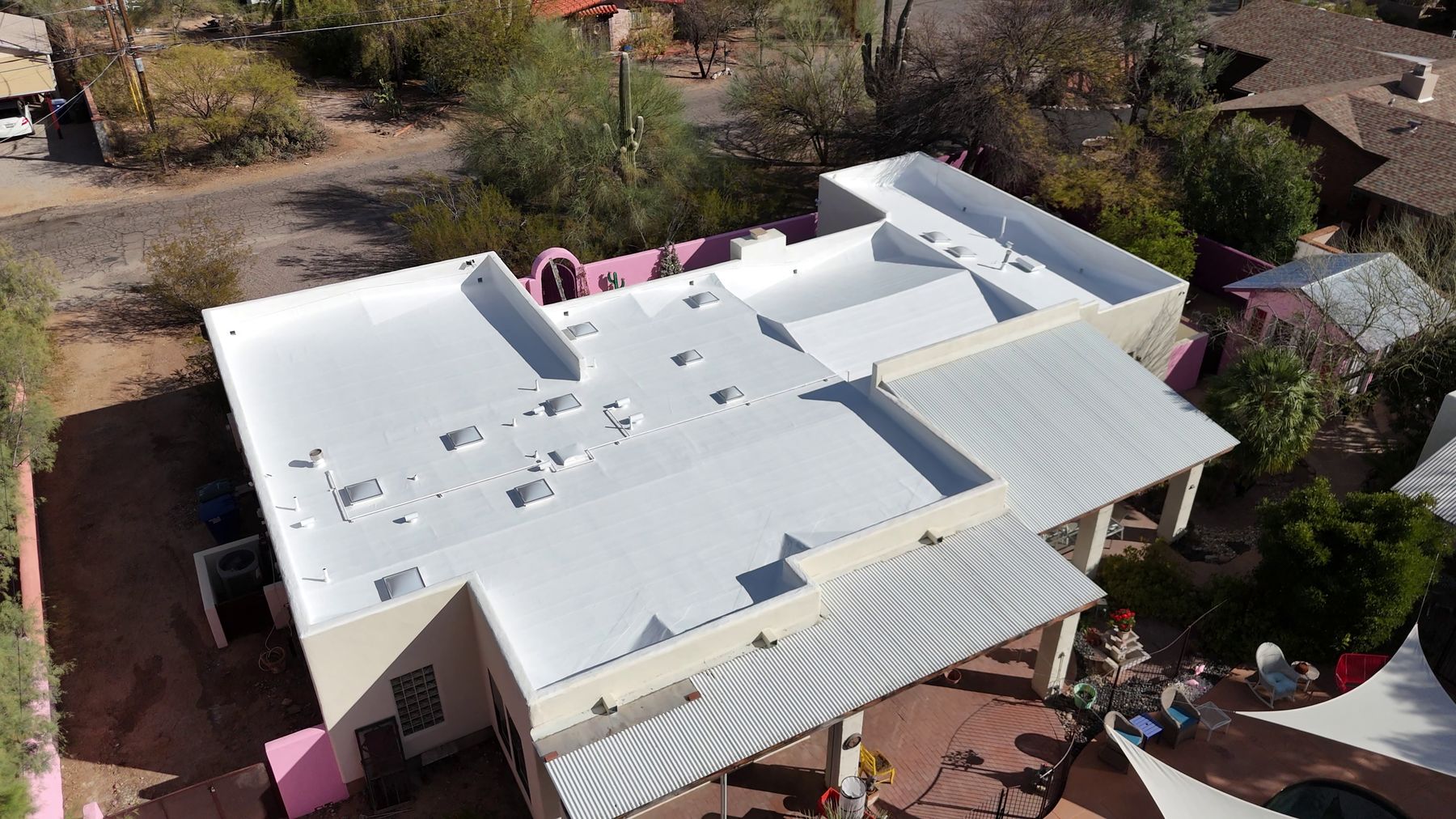
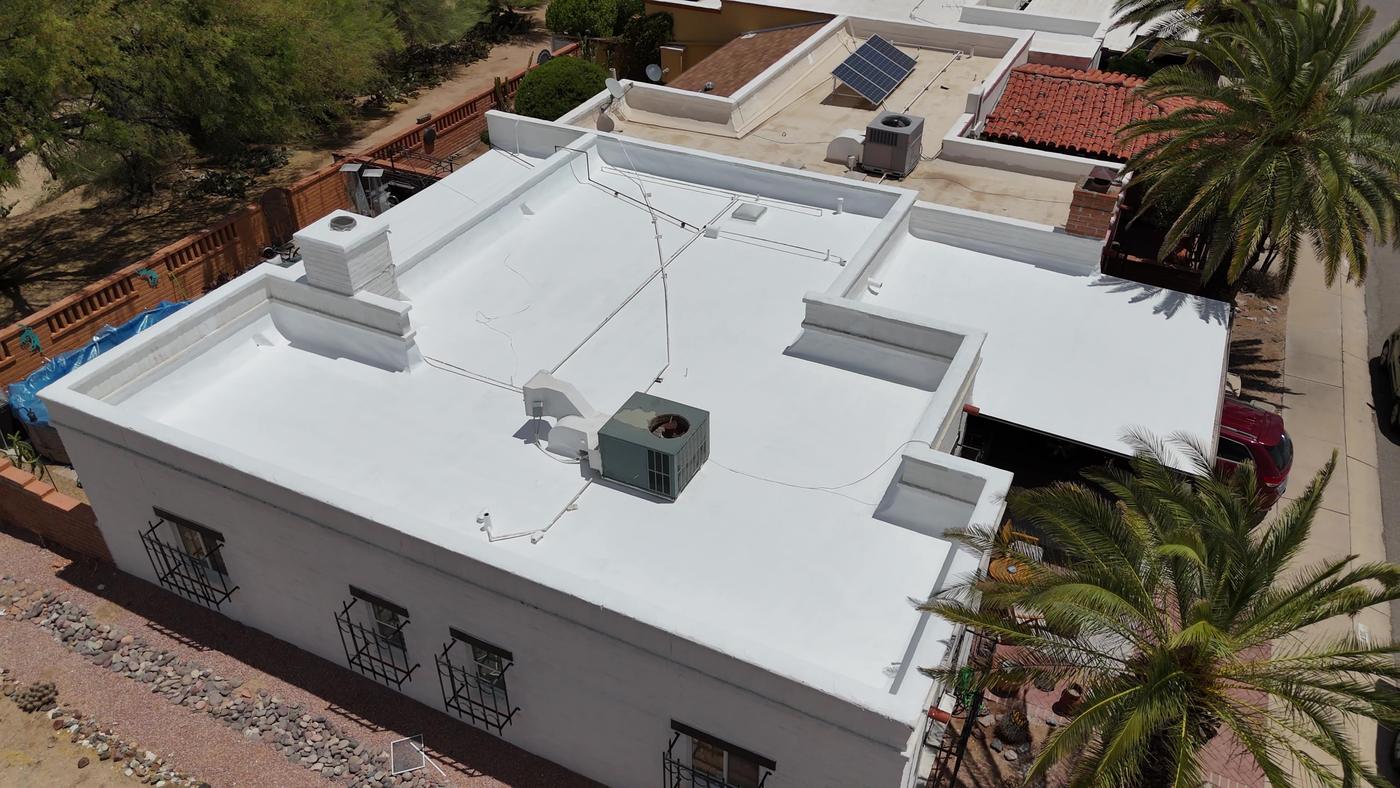
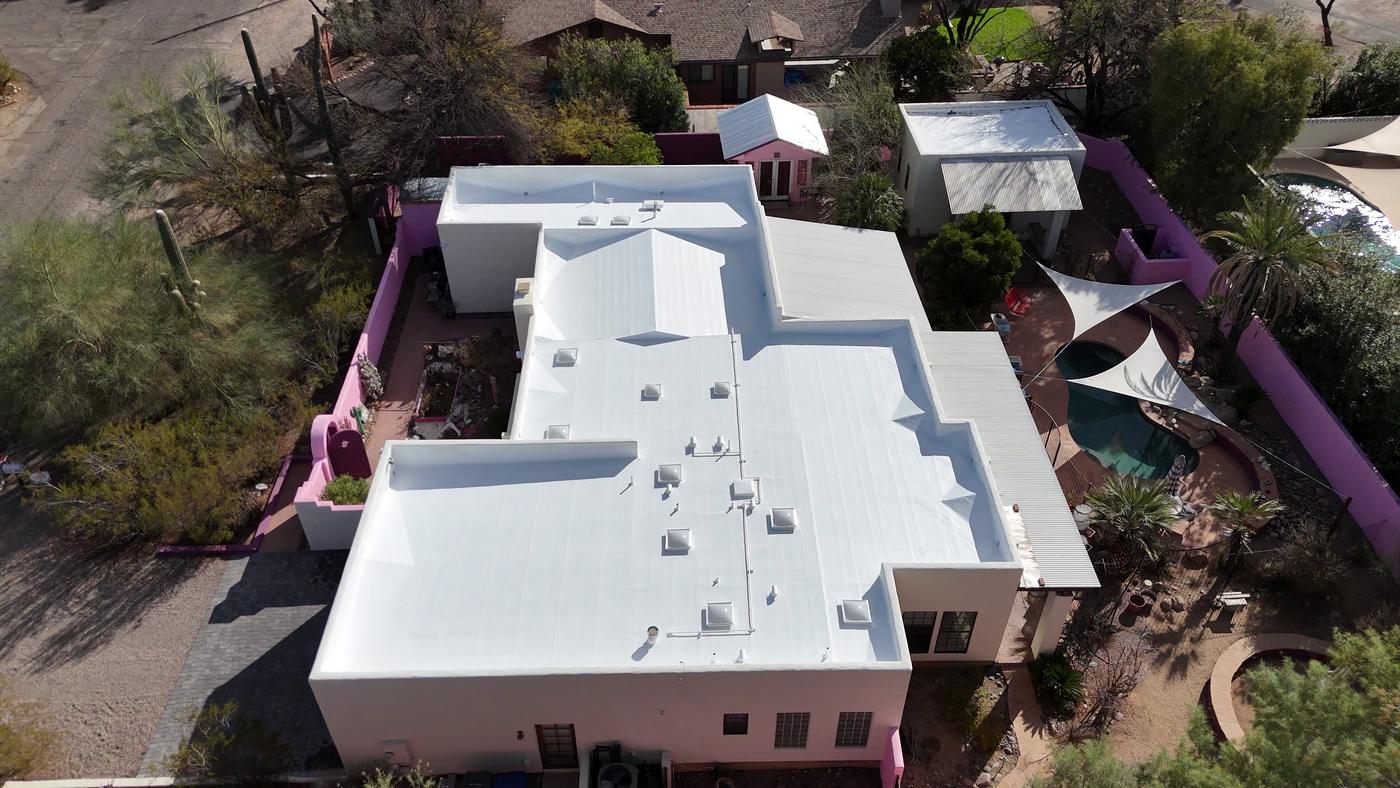
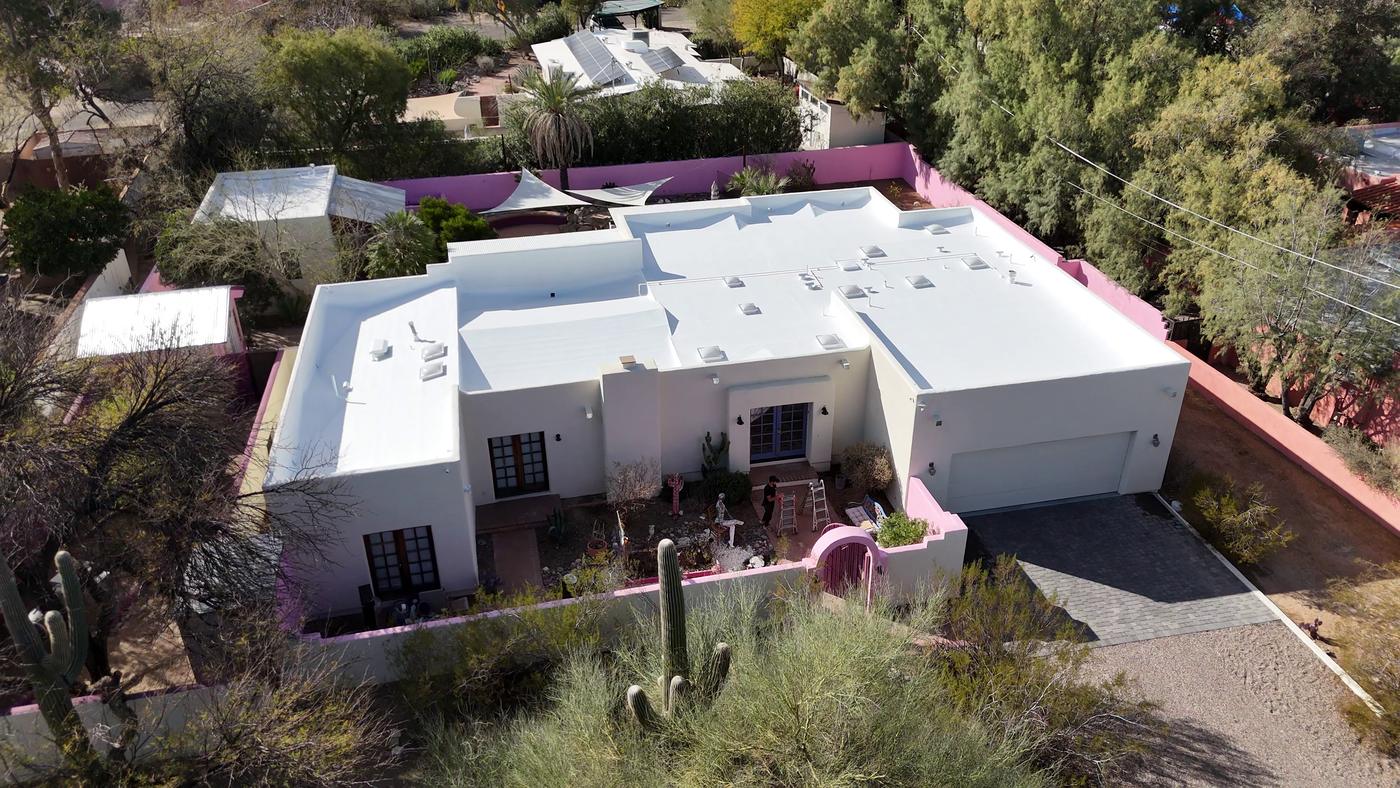
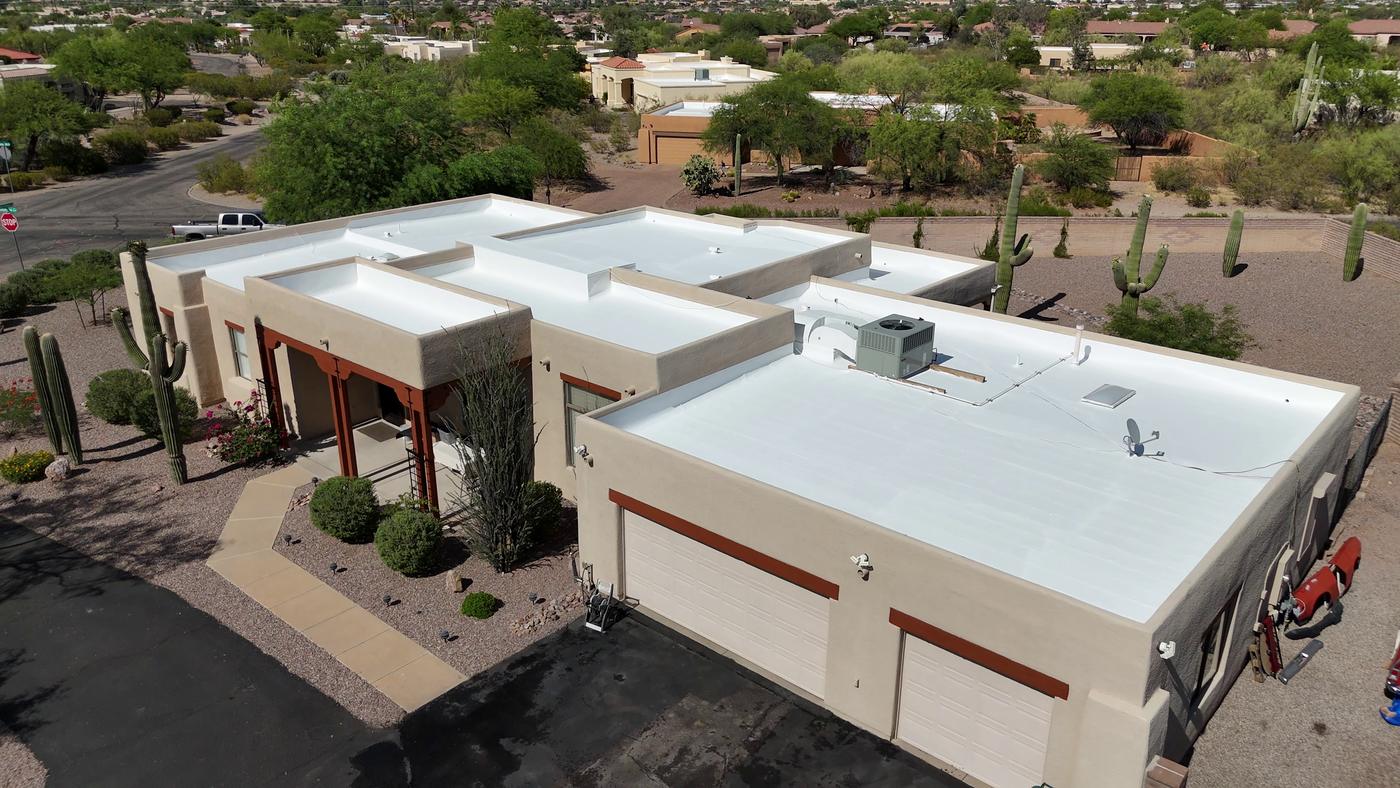
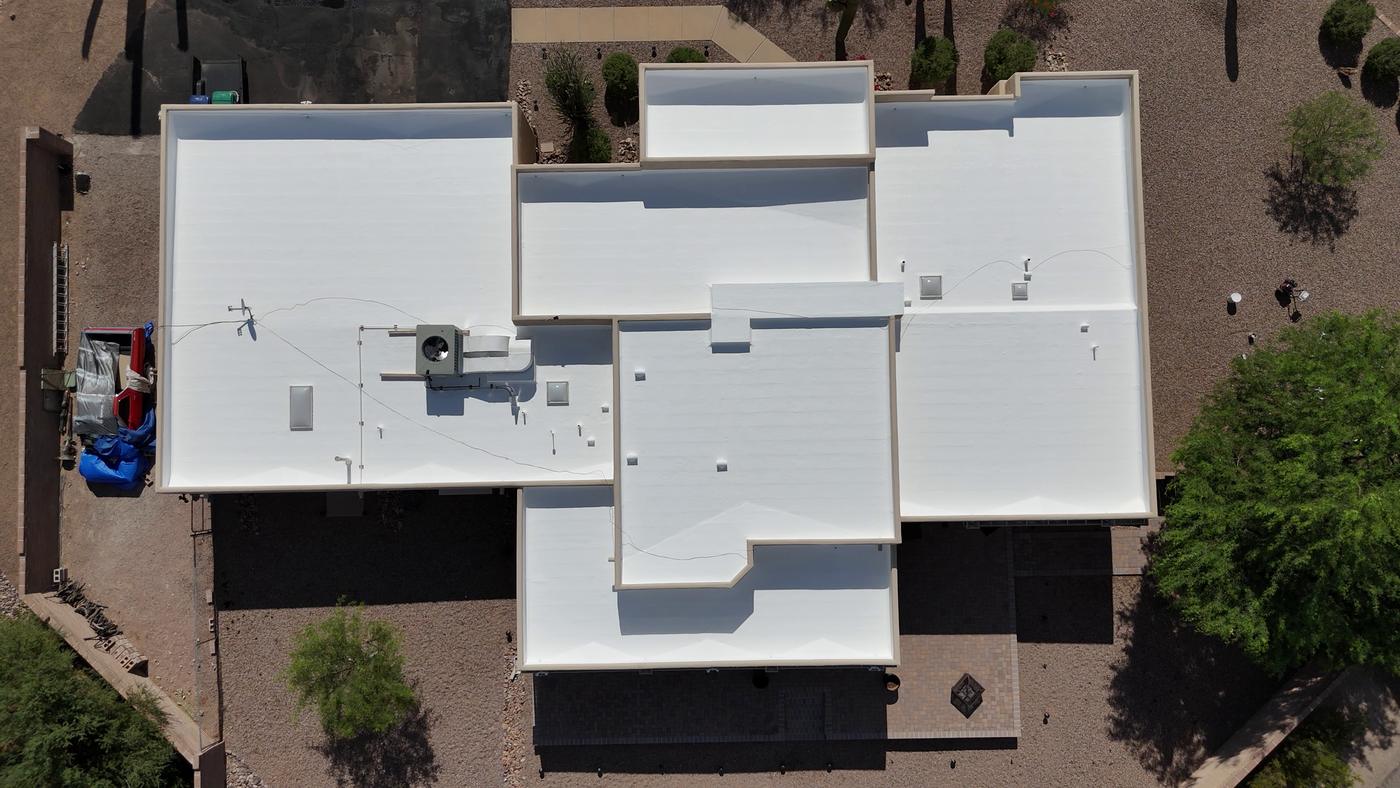
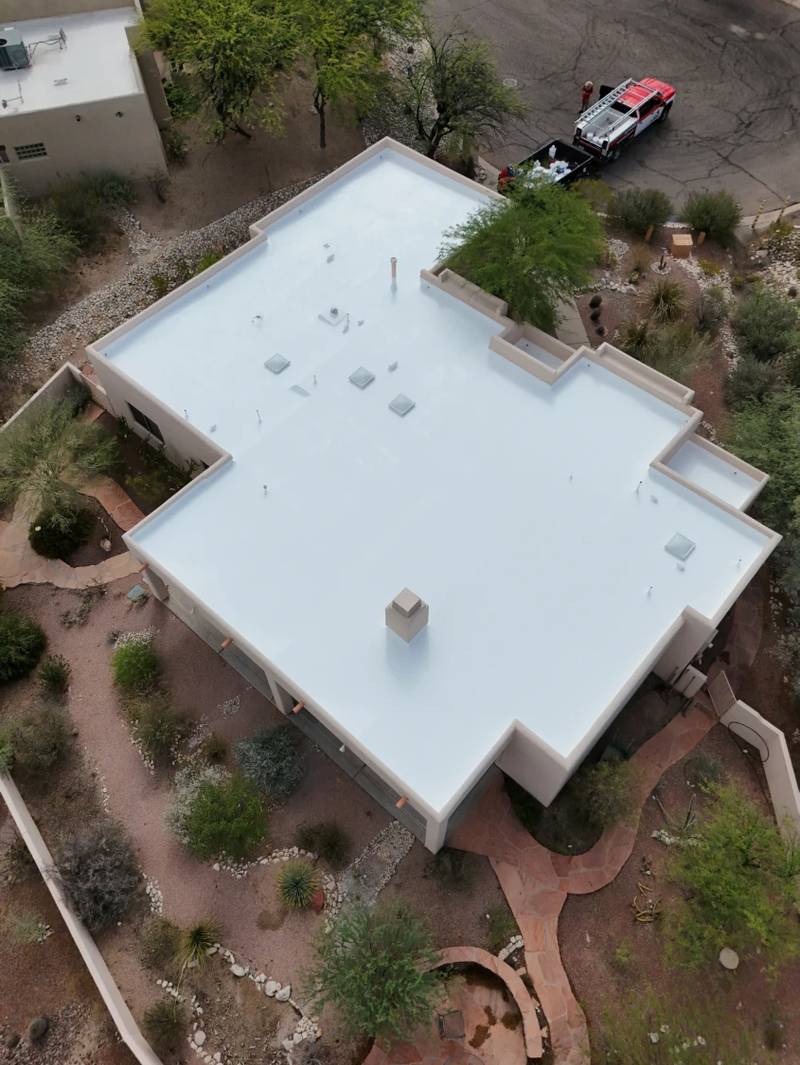
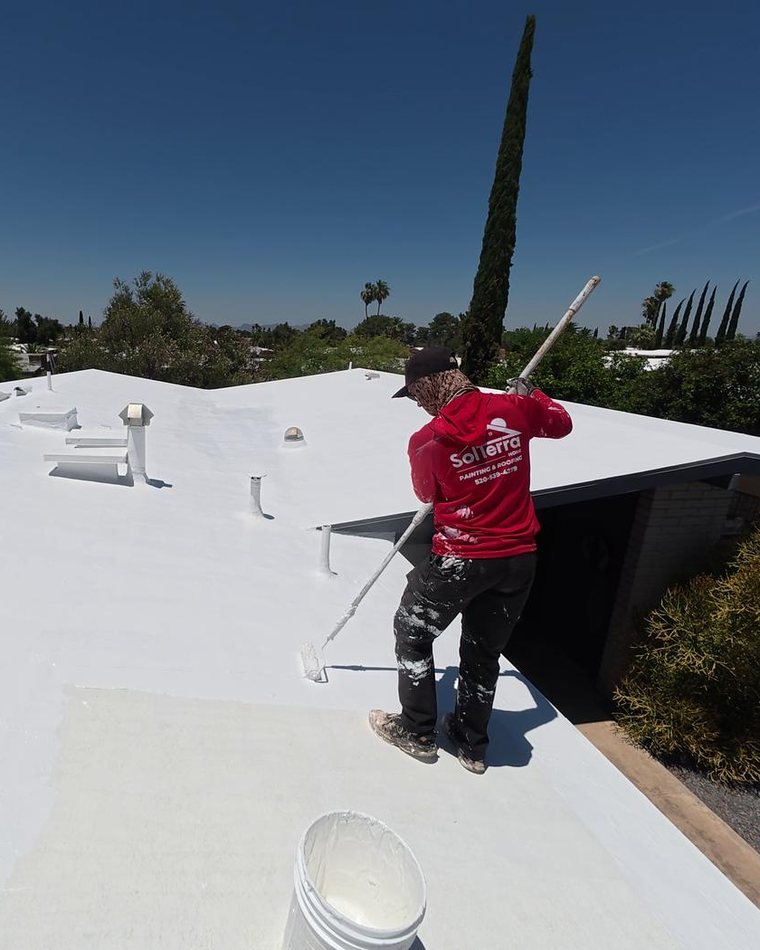
Flat roof coating project in central Tucson, sealing penetrations and applying a fresh reflective coat for UV and monsoon protection.
That's why we inspect the roof before giving you a final price. You won't receive a price based only on square footage without considering what the roof actually needs.
Roof coating and roof replacement solve different problems.
Coating makes sense when the existing roofing system is still serviceable but needs maintenance and additional protection.
The goal is to preserve and extend the life of the roofing system already on your home.
Replacement becomes the better option when the underlying roofing system has deteriorated beyond what repairs and maintenance can reasonably address.
Signs may include widespread failure, significant moisture intrusion, deteriorated decking or a roof assembly that is simply no longer worth continuing to maintain.
A relatively new roof may not need either one.
If your existing roofing membrane is still performing properly and coating would be unnecessary or potentially counterproductive, we'll tell you.
Our job isn't to sell coating. It's to tell you what your roof actually needs.
There isn't one schedule that applies to every roof.
As a general maintenance guideline, we commonly recommend having an existing coated roof evaluated for recoating approximately every 3–5 years.
The condition of the roofing system underneath the coating matters just as much as the coating itself. An older built-up roof may continue developing new expansion cracks and weak areas sooner than a newer roof in better condition.
That's why we prefer to inspect the roof rather than simply telling homeowners to recoat automatically based on age.
We strongly recommend inspecting the roof and removing accumulated debris at least once per year.
Leaves, dirt and other debris can hold moisture, interfere with drainage and collect around scuppers and low areas. Keeping the roof clean and drainage paths open helps protect both the coating and the roofing system underneath it.
If you're not comfortable accessing your roof, we can inspect it for you.
If your roof doesn't need coating, we'll tell you.
We identify vulnerable cracks and reinforce them where needed with polyester fabric before the entire roof is covered.
Drainage points aren't an afterthought. We inspect and properly detail the scuppers before coating.
We don't simply paint over bubbles and failed areas.
When practical, we can improve isolated ponding and slope issues before applying the coating system.
HVAC supports and other rooftop equipment require careful attention so they don't become overlooked weak points in the roofing system.
Our coating systems are built around professional Polyglass roofing products selected for the roof and the conditions here in Southern Arizona.
SolTerra Roofing is locally owned and operated. The people inspecting your roof understand how these systems are actually installed because we work on roofs ourselves.
SolTerra Roofing provides residential flat roof coating and recoating throughout Tucson and surrounding communities, including:
Have a roof outside this area? Contact us and we'll let you know if we service your location.
View Our Complete Service AreaA properly installed elastomeric coating system creates a seamless protective membrane over an approved roofing substrate. However, the condition of the roofing system underneath it is critical.
Coating should not be used as a shortcut around failed roofing, wet materials or structural problems.
Cracks should be evaluated and repaired before the field coating is installed.
Where appropriate, we use polyester reinforcing fabric to bridge and reinforce vulnerable cracks instead of simply painting over them.
Expansion cracks continue moving as the roof heats and cools. Polyester reinforcement helps strengthen these vulnerable repair areas before the roof is coated.
Once the entire roof is covered in coating, locating old cracks becomes much more difficult, which is why this work needs to happen first.
Yes. We pressure wash every roof we coat so dirt, loose material and contaminants are removed before repairs and coating application.
Coating itself does not correct the slope of a roof.
If the roof has isolated drainage or ponding problems that can reasonably be corrected, we may recommend slope-building or drainage improvements before applying the new coating.
We detail the roofing around and beneath HVAC supports where practical.
The goal is to avoid leaving unprotected areas underneath equipment supports or creating a support block that acts like a dam and traps water.
The exact system depends on the Polyglass product selected.
Our PolyBrite 24 and PolyBrite 31 systems typically receive two applications at approximately 24 wet mils per coat.
Our premium PolyBrite 35 system uses a PolyBrite 71 base coat followed by the PolyBrite 35 finish coat at the specified application rates.
Our coating services start at approximately $1 per square foot on qualifying roofs.
Repairs, drainage correction, slope building, extensive detailing and roof condition can increase the cost.
We generally recommend evaluating an existing coated roof every 3–5 years.
Some roofs may be ready sooner while others may remain in good condition longer. The age and condition of the roofing system underneath the coating are important factors.
Not automatically.
Some newer modified-bitumen roofs are designed to perform without an additional coating. Applying a coating simply because a certain number of years has passed is not always beneficial.
We recommend inspecting the existing roof first and only coating it when doing so actually benefits the roofing system.
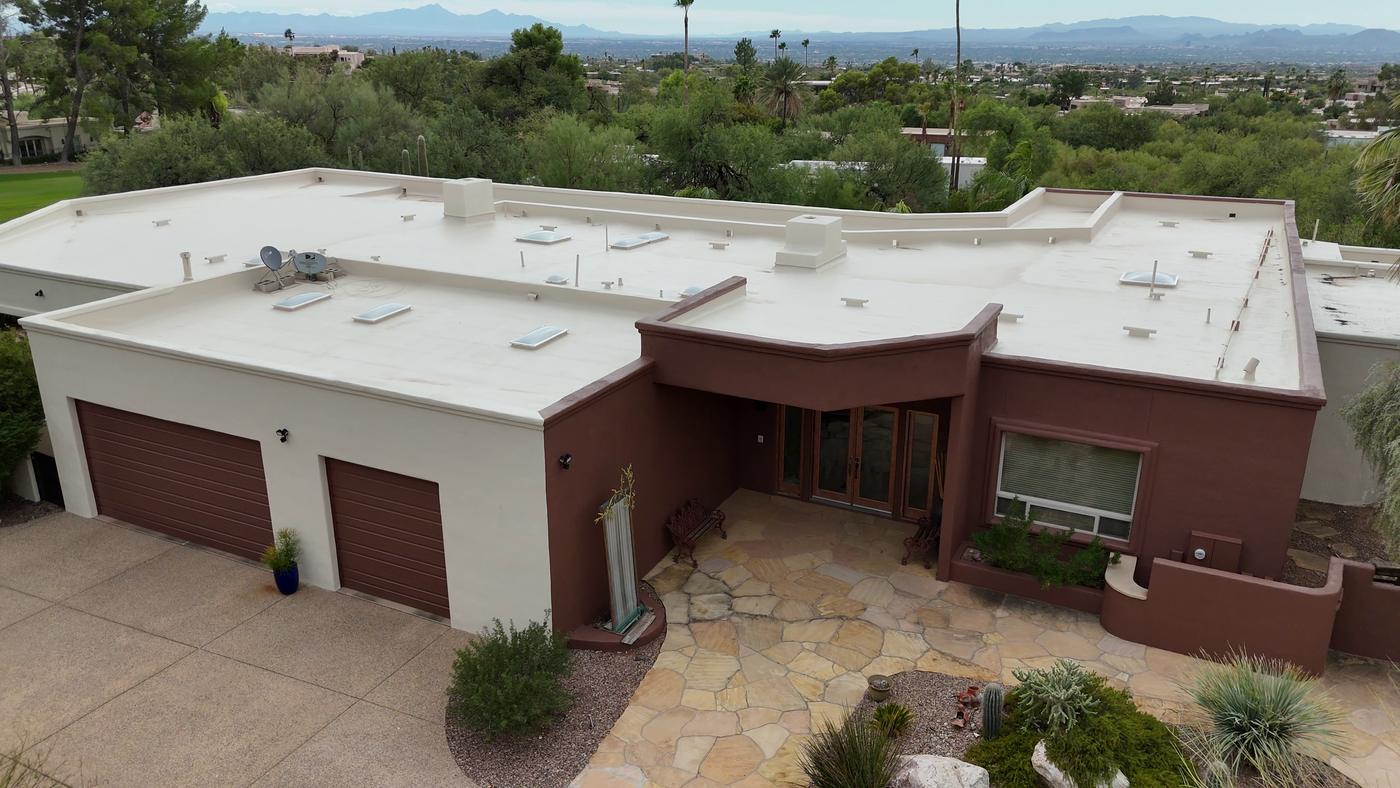
White is a common choice because reflective white coatings reduce solar heat absorption at the roof surface. Tan may also be available for homeowners who prefer a different appearance.
No. If the underlying roofing system is too deteriorated, has widespread moisture problems or is no longer a reasonable candidate for continued maintenance, roof replacement may be the better solution.
We'll show you what we find and explain your options before recommending a coating.
You shouldn't have to guess whether your flat roof needs another coating.
We'll inspect the roof, show you what condition it's in, identify cracks, blisters, drainage or scupper issues and tell you whether coating makes sense. If your roof isn't ready for coating, we'll tell you that too.
Tell us a little about your roof and we'll contact you to schedule an inspection.
Thank you for reaching out to SolTerra Roofing. A member of our team will contact you shortly.
Want to speak with us now?
Call (520) 539-4279
Your information stays with SolTerra Roofing. No spam or high-pressure sales calls.